Last updated November 21, 2026
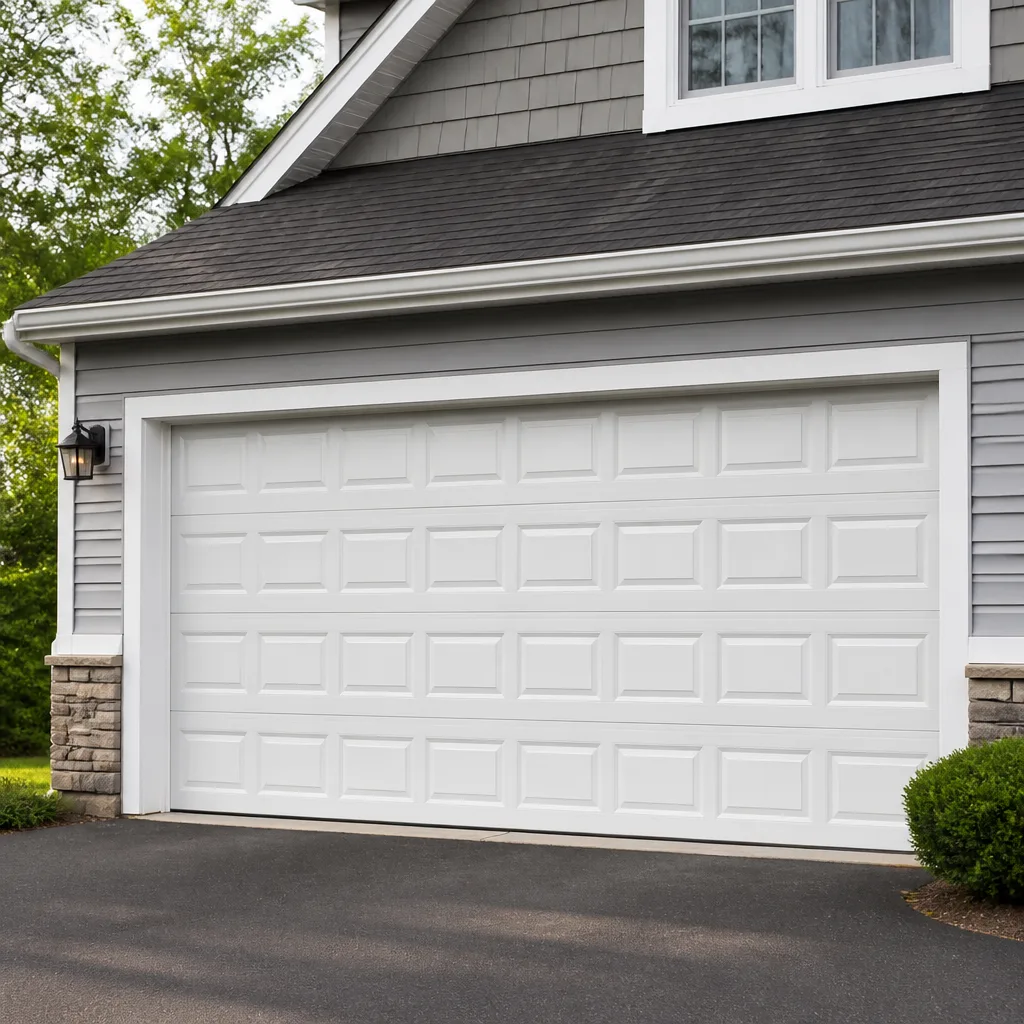 Raised-panel steel
 Carriage house
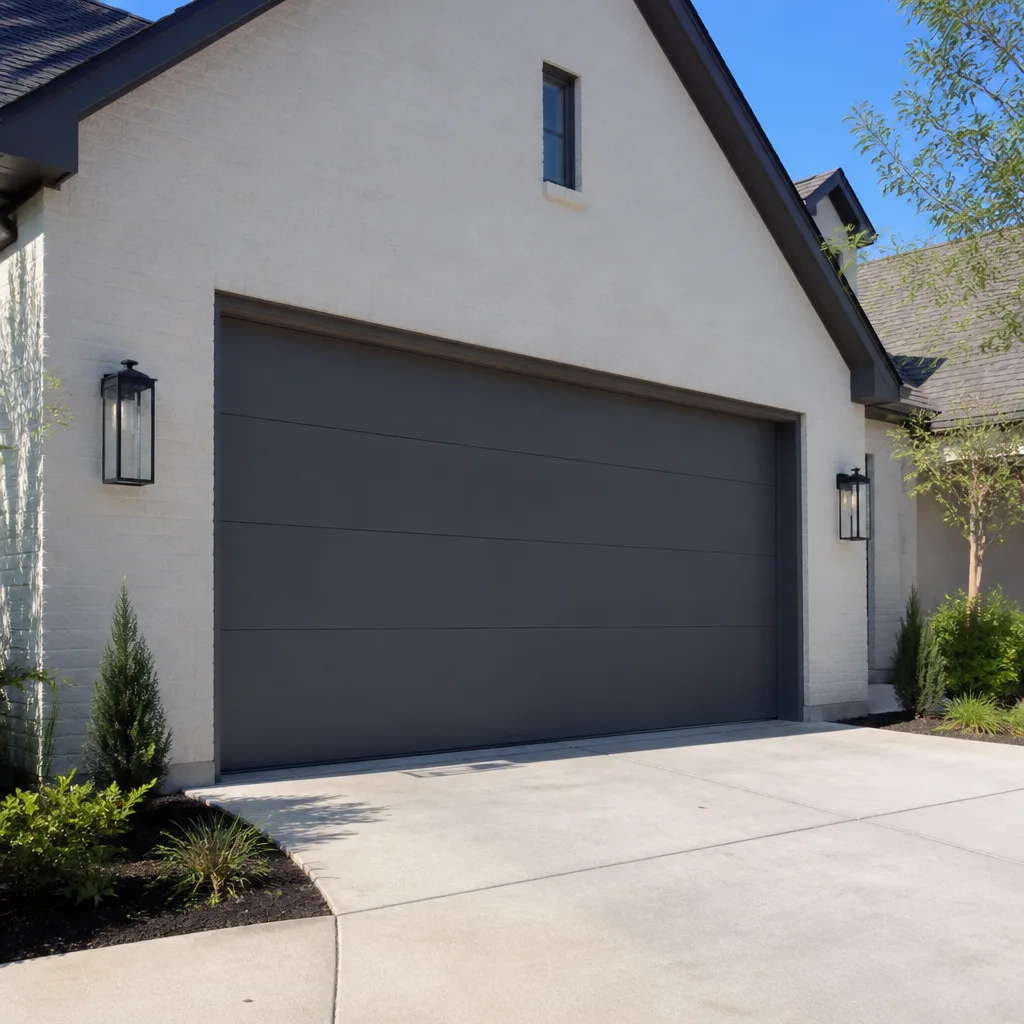 Modern flush
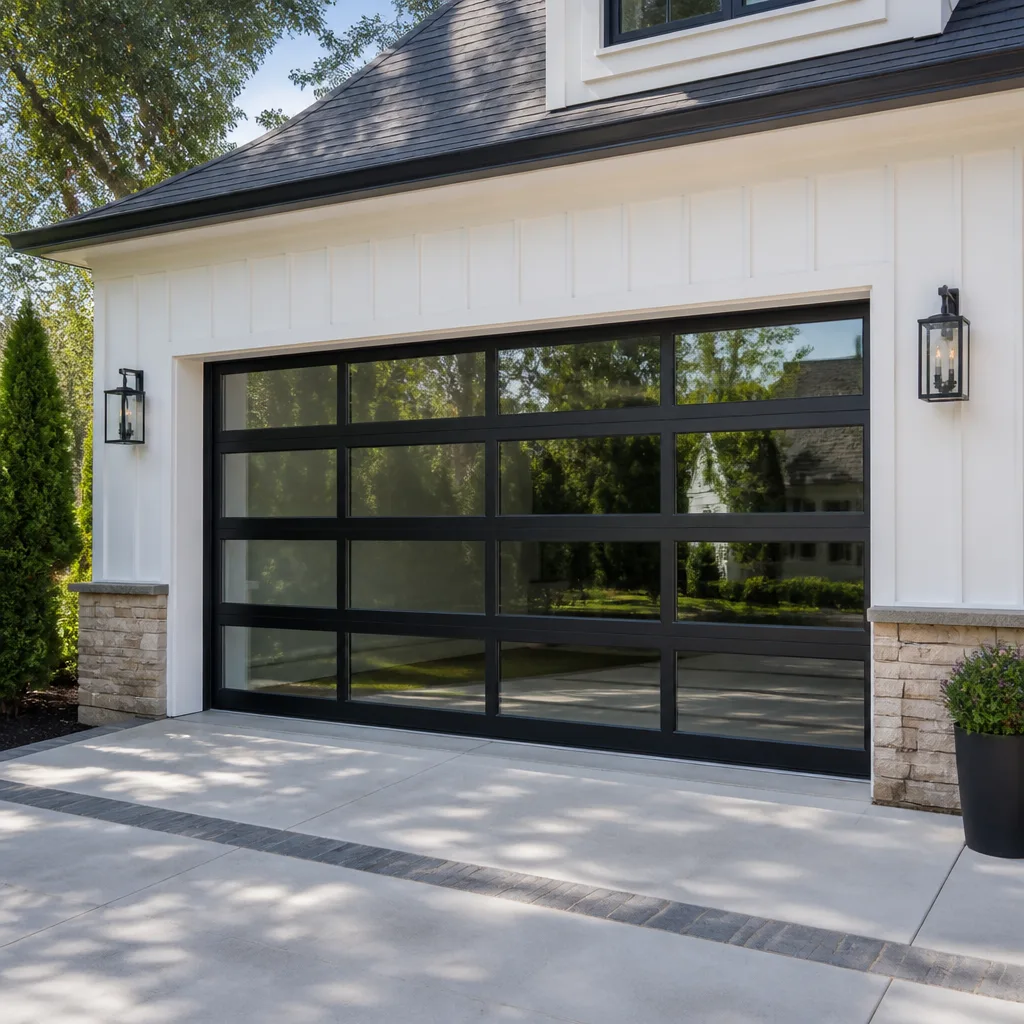 Full-view glass
 LiftMaster openers
 Chamberlain openers
Full 25-point door and opener safety check with every visit - springs, cables, rollers, tracks, and your LiftMaster or Chamberlain opener included
You get a price before we start. It does not change when the pro arrives.
Get your free estimateGarage Door Repair Maintenance Checklist for Lake City Homeowners
Most garage door maintenance checklists you’ll find online tell you to lubricate your springs last. In Lake City, that’s backwards. Our wet winters make spring corrosion one of the first things that kills a door system, not the final item on a to-do list. Generic advice written for a dry climate misses the failures already forming on doors all over the neighborhood. This guide reorders the checklist around what actually breaks first here, what products hold up in Pacific Northwest humidity, and which findings mean stop using the door and call a professional today.
Quick Answer
A garage door maintenance checklist for Lake City should be sequenced for wet, cool conditions: inspect springs and cables for corrosion first, then bottom seals, then wood panel swelling, then hardware and opener. Check the system twice a year, in early fall before the rainy season and in early spring after it. Any sign of a frayed cable, a stretched or rusted spring, or a door that drops suddenly means stop using it and call a professional.
Styles & brands we work with
- Raised-panel steel
- Carriage house
- Modern flush
- Full-view glass
- LiftMaster openers
- Chamberlain openers
Table of Contents
- Why Lake City’s Climate Changes the Checklist Order
- Step 1: Springs and Cables First, Not Last
- Step 2: Bottom Seal and Weatherstripping
- Step 3: Wood Panel Swelling and Paint Integrity
- The Right Lubricants for Wet PNW Conditions
- Your Lake City Seasonal Maintenance Schedule
- Red Flags: Stop Using the Door vs. Schedule a Visit
- What You Can Check Yourself and What You Can’t
Why Lake City’s Climate Changes the Checklist Order
Lake City sits in a cool, wet climate with a long damp season and a short dry one. That sequence of moisture exposure, then drying, then moisture again is what wears out a garage door system faster than steady conditions would. Metal parts corrode during the wet months. Wood swells, dries, and swells again. Seals harden and crack. Hardware loosens as temperatures swing between the wet season and the dry one.
National checklists usually assume the opposite: a mostly dry climate where mechanical wear from daily use is the main concern and corrosion is a footnote. That’s why they put lubrication near the end. In Lake City, corrosion and moisture intrusion are the leading causes of failure, so the checks that catch them belong at the front of the list.
Here’s how we think about the order:
- Springs and cables – the highest-risk components and the most vulnerable to wet-season corrosion. Check these first because a failure here is the most dangerous.
- Bottom seal and weatherstripping – the first line of defense against moisture getting into the door and the garage. When these fail, everything above them degrades faster.
- Wood panels and finish – swelling, cracking, and paint failure that let water into the structure of the door.
- Lubrication – applied to the right parts with the right product, after you’ve confirmed the parts are sound.
- Hardware, tracks, and rollers – the mechanical wear items that the generic checklists usually put first.
- Opener and safety reversal – important, but on a wet-climate door the mechanical system fails before the opener does.
Reordering the checklist this way doesn’t take more time. It just makes sure the checks most likely to find a real problem happen while you still have the energy and attention to act on them. When you’re ready to have a trained eye look at the parts you can’t safely inspect yourself, our garage door repair service covers the full system.
Step 1: Springs and Cables First, Not Last
Torsion springs and the cables that run alongside them are under extreme tension. They’re also the components most affected by Lake City’s wet winters. Moisture in the air works on the steel of the springs and the strands of the cables through the damp season, and corrosion weakens both. A spring that would last a long time in a dry climate can fail noticeably sooner here if it’s never inspected.
Safety note: Springs and cables are under high tension and can cause serious injury if they release unexpectedly. Do not try to adjust, lubricate the coils under tension, or replace them yourself. This is a visual inspection only, done from a safe distance with the door closed.
What to look for from a safe distance:
- Rust on the spring coils. Surface rust is a warning sign. Heavy flaking rust means the spring is compromised and should be inspected by a professional.
- A visible gap in a torsion spring. A gap means the spring has broken. Stop using the door.
- Frayed or kinked cables. Run your eyes along each cable. Broken strands, kinks, or a cable that looks like it’s unraveling mean the door is unsafe to operate.
- Cable drum wear. Look at the drums at the top corners. Grooves worn into the drum, or a cable that’s jumped its track on the drum, are signs of a problem.
- Uneven tension. If the door looks crooked when closed or one side seems to lift before the other, the springs or cables are out of balance.
Cable and drum wear accelerates in homes with big temperature swings between the wet and dry seasons, which describes a lot of Lake City. The metal expands and contracts, the cable shifts slightly on the drum, and over time the wear concentrates in one spot. That’s why we check cables and drums on the same visit as the springs, not as a separate item.
Spring work is a core part of what we do because it’s the highest-risk repair on the whole door. If you find any of the red flags above, don’t wait for a scheduled visit. Our garage door spring repair team handles springs and cables as a dedicated service, not an afterthought.
Step 2: Bottom Seal and Weatherstripping
The bottom seal is the rubber or vinyl strip along the bottom edge of the door, and it’s the first thing that fails in a wet climate. Its job is to keep rain, wind-driven moisture, and cold air out of the garage. When it hardens, cracks, or tears away from the door, water gets in, and everything else in the system starts to degrade faster.
Here’s how to check it:
- Close the door and look at the seal from inside. You shouldn’t see daylight under the door. Any gap means the seal isn’t doing its job.
- Run your hand along the seal. It should feel flexible and rubbery. If it’s stiff, brittle, or crumbly, it’s due for replacement.
- Look for tears, splits, or sections pulling away from the retainer. A seal that’s coming loose lets water in at the edges.
- Check the sides and top weatherstripping. The stops around the door frame should sit snug against the door when it’s closed. Gaps at the corners are common in older Lake City homes and let moisture in.
Replacing a bottom seal is one of the few maintenance tasks a careful homeowner can often handle, provided the door itself is sound and the retainer is in good shape. The catch is getting the right profile for your door. Bottom seals come in different shapes and sizes, and the wrong one won’t seal properly. If you’re not sure what you have, we can identify it and supply the correct part. Our garage door parts service covers seals, weatherstripping, rollers, and the other wear items that go first in wet conditions.
A failed bottom seal doesn’t just let water in. It also lets pests in, and it makes the garage colder and damper, which is exactly the environment that speeds up corrosion on the springs and cables you just checked. Fix the seal and you slow down everything downstream of it.
Step 3: Wood Panel Swelling and Paint Integrity
If your door has wood or wood-composite panels, Lake City’s wet winters are hard on them. Wood absorbs moisture, swells, then dries and shrinks when the weather turns. Repeat that cycle year after year and you get cracks, warping, and paint failure. Once the paint fails, water gets into the wood directly, and the damage speeds up.
What to inspect:
- Paint and finish. Look for peeling, blistering, or bare spots, especially along the bottom edge of the panels and around the hardware where water collects. Any bare wood is a spot to repaint.
- Panel warping. Sight down the door from the side. Panels that bow or look wavy have absorbed moisture and may need repair or replacement.
- Cracks and splits. Small cracks at panel joints are common. Larger cracks or splits that go through the panel are a structural concern.
- The bottom edge of the door. This is where water sits and where rot starts. Probe gently with a screwdriver. If it sinks in easily, the wood is soft and needs attention.
- Joints and hardware seams. Gaps at the joints where panels meet are entry points for water. Caulk and sealant should be intact.
Modern steel and aluminum doors don’t swell, but they have their own wet-climate issues. Look for rust at the bottom edge, bubbling paint that hides rust underneath, and dents that have broken the finish and exposed bare metal. A door from Clopay, Amarr, Wayne Dalton, or Raynor may be steel, wood, or composite depending on the model, so the inspection differs. If your door’s finish is failing, a fresh coat of exterior paint or a properly prepped refinish is the cheapest way to extend its life. If the panels themselves are soft or warped, it may be time to look at repair or replacement, which is where our garage door installation service comes in.
The Right Lubricants for Wet PNW Conditions
Lubrication matters, but the product you use matters more in a wet climate. The wrong lubricant either washes out, attracts dirt, or doesn’t protect against moisture at all. Here’s what works and what doesn’t in Lake City’s damp season.
What to use:
- White lithium grease or a lithium-based spray on the hinges, rollers, and bearing plates. It stays put, resists moisture, and doesn’t run off in the rain.
- A silicone-based spray or a dedicated garage door lubricant on the tracks and the torsion spring coils (applied lightly and only on the coils, never while the door is under tension).
- Dry silicone spray on nylon rollers, which don’t need heavy grease and run cleaner with a light coat.
What to avoid:
- WD-40 or general-purpose penetrating oil as a long-term lubricant. It’s a solvent, not a protective grease. It washes out quickly in wet conditions and can actually strip the protection off the parts you’re trying to help.
- Heavy motor oil or household grease on the tracks. It attracts dust and grit, which turns into a grinding paste on the rollers.
- Anything on the cables. Cables don’t get lubricated. Keep them clean and dry and inspect them for fraying instead.
Apply lubricant to the hinges, rollers, and springs two to four times a year. In Lake City, put one of those applications at the end of the dry season, before the wet months start, so the protection is fresh when the weather turns. Don’t over-lubricate. A light coat is enough; excess grease collects debris and makes a mess on the tracks.
Your Lake City Seasonal Maintenance Schedule
Generic checklists say to inspect your door every three months. That’s not a bad baseline, but Lake City’s seasons don’t divide into neat quarters. The two moments that matter most are the transition into the wet season and the transition out of it. Here’s a schedule built around those shifts.
- Early fall, before the wet season. The most important inspection of the year. Check springs and cables for corrosion, confirm the bottom seal is flexible and sealing, look for bare or peeling paint, and apply a fresh coat of lithium grease to the moving parts. The goal is to get the door ready for months of moisture.
- Mid-winter, during the wettest stretch. A quick visual pass. Look for water stains on the garage floor or walls, check the bottom seal for gaps, and listen for new noises when the door runs. Catching a problem during the wet season is better than finding it after.
- Early spring, as things dry out. Inspect for damage the wet season left behind: rust on the springs, wood swelling or cracking, paint failure, loose hardware. This is the time to schedule repairs before the dry season and before the next winter.
- Mid-summer, dry season. Check the mechanical parts: rollers, hinges, tracks, and the opener. Apply a light coat of lubricant. Test the safety reversal, and clean and balance the door. A dry-season check is where you catch wear before it gets tested by the rain.
Add a check after any stretch of heavy rain. Water gets into places you don’t expect, and a quick look at the bottom of the door and the floor around it takes two minutes. If you notice a problem you can’t safely inspect yourself, that’s the point to bring in a professional rather than wait for the next scheduled check.
If your door is older or has visible wear, a twice-a-year professional tune-up can catch the things a homeowner checklist can’t reach safely. Our garage door repair team can go through the whole system and give you an honest read on what needs attention now and what can wait.
Red Flags: Stop Using the Door vs. Schedule a Visit
Not every finding is an emergency, and not every finding can wait. The difference matters: some problems are cosmetic or minor, and some mean the door could fail dangerously the next time you press the button. Here’s how we separate them.
Stop using the door and call a professional today
- A visible gap in a torsion spring, or a broken spring. The door is no longer counterbalanced and can drop without warning.
- A frayed, kinked, or unraveling cable. Cable failure is sudden and dangerous. Don’t operate the door.
- The door drops or slams when you release it. This means the springs have lost tension. Don’t keep cycling it.
- The door comes down crooked or one side hangs lower. Uneven tension can damage the panels and the opener.
- The opener pulls the door but the door won’t move, or the motor runs but the door stays put. Something in the mechanical system has broken. Stop and call.
- Loud bangs or pops from the door. A spring has likely failed. Don’t run it again.
Schedule a visit, but the door can still be used carefully
- A stiff or cracked bottom seal. It’s letting moisture and pests in, but it won’t hurt you.
- Rust starting on the springs. Surface rust is a warning, not a failure. Get it inspected.
- Peeling paint or small cracks in wood panels. Cosmetic and fixable, but don’t let it go into the wet season.
- Squeaky rollers, hinges, or a door that runs a little loudly. Usually a lubrication or hardware issue.
- A slow-closing or jerky opener. If it’s from LiftMaster, Chamberlain, Genie, or Craftsman, our garage door opener repair team can take a look.
When in doubt, stop and get it looked at. A door that’s making a new noise or moving differently than it did last week is telling you something. It’s far cheaper to have a small finding checked than to deal with a failure that took the door down with it.
What You Can Check Yourself and What You Can’t
A homeowner checklist is a screening tool, not a repair manual. Knowing where the line is keeps you safe and keeps you from making a small problem worse. Here’s how we draw it.
Safe to inspect and handle yourself:
- Visual inspection of springs, cables, and drums from a safe distance, door closed
- Checking the bottom seal for gaps, cracks, and flexibility
- Looking for rust, rust bubbling, and peeling paint on the panels
- Testing the opener’s safety reversal with a small object
- Checking that the door is balanced and moves smoothly by hand when disconnected from the opener
- Lubricating hinges, rollers, and springs (lightly)
- Repainting bare or peeling spots on wood and steel doors
Call a professional:
- Replacing or adjusting springs and cables of any kind
- Replacing a broken cable or a worn cable drum
- Realigning a door that has come off its tracks
- Adjusting the torsion system or the counterbalance
- Replacing bent or damaged panels
- Repairing opener wiring, the motor, or the control board
- Any repair involving the electrical system or the opener’s safety sensors
Opener work has its own discipline. The opener and the door are separate systems, and brands like LiftMaster, Chamberlain, Genie, and Craftsman each have their own logic and parts. If you’re not sure what’s wrong with the opener, or whether the problem is the opener or the door, our team can tell you. Our technicians have up to 11 years of experience with both the door system and the drive system, and they work across eight major brands, including Wayne Dalton, Craftsman, Raynor, and LiftMaster.
Common Mistakes to Avoid
- Putting lubrication first and inspection last. Most people start with a can of lubricant and stop there, but in Lake City’s wet climate the corrosion and seal problems you’d catch by inspecting first are the ones that actually take doors down.
- Using WD-40 as a garage door lubricant. It’s a solvent that washes out in wet conditions and doesn’t protect against moisture. White lithium grease and silicone sprays are the right products for a Pacific Northwest door.
- Ignoring a small crack in the bottom seal. A seal that’s starting to fail lets water in, and that moisture speeds up corrosion on the springs and cables above it. Fixing a cheap part early prevents a much bigger repair later.
- Waiting for the wet season to check the door. Early fall, before the rain settles in, is when you want a fresh coat of lubrication and a clean bill of health on the seals and wood. Checking in the middle of a wet stretch means the damage is already underway.
- Trying to inspect springs while the door is under tension. Springs and cables can release with tremendous force. Visual inspection only, from a safe distance. Professional repair for anything you find.
- Assuming the opener is the problem when the door is the problem. A door that runs slowly, jerks, or won’t open may have a spring or balance issue, not an opener issue. Diagnosing the wrong system wastes money and can make the real problem worse.
- Skipping the dry-season check. It’s easy to forget about the door when the weather is good, but that’s exactly the time to catch wear before the next wet season tests it. A little maintenance in summer saves a repair in winter.
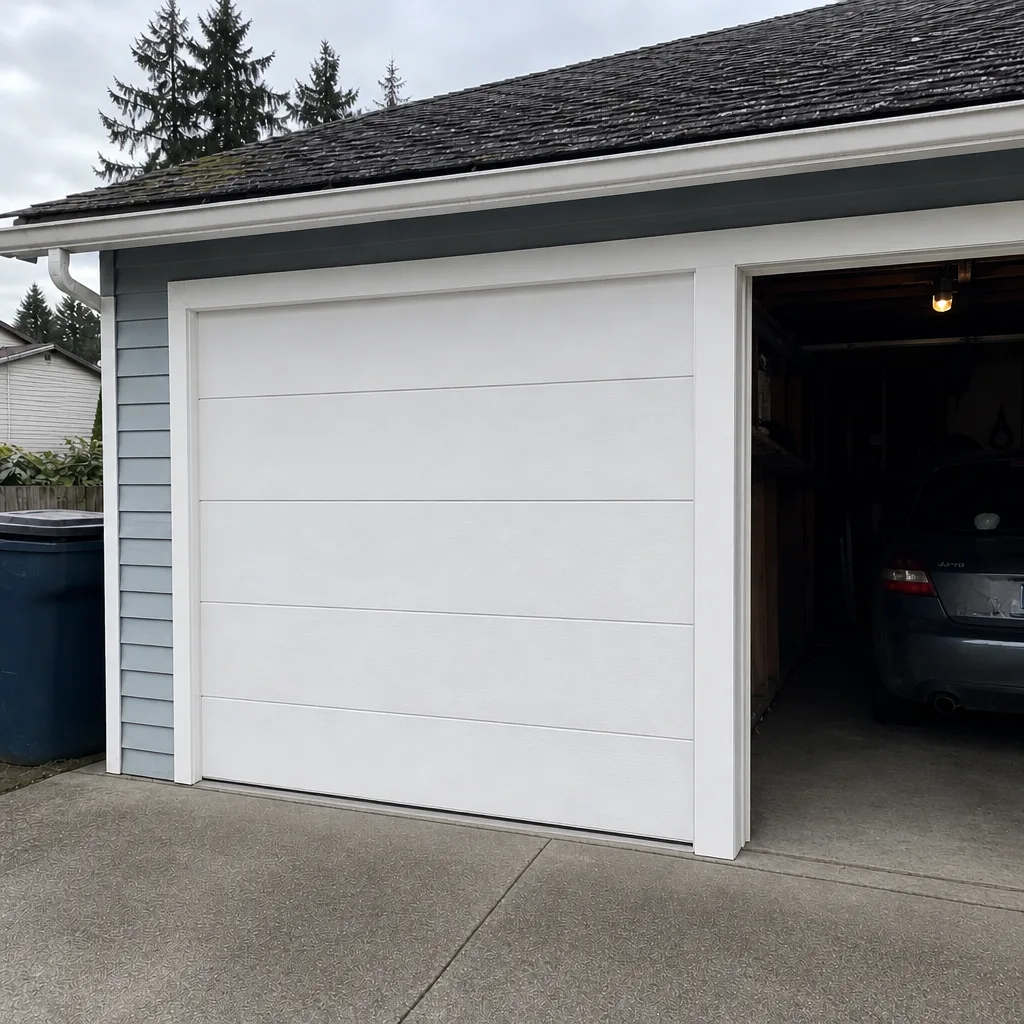
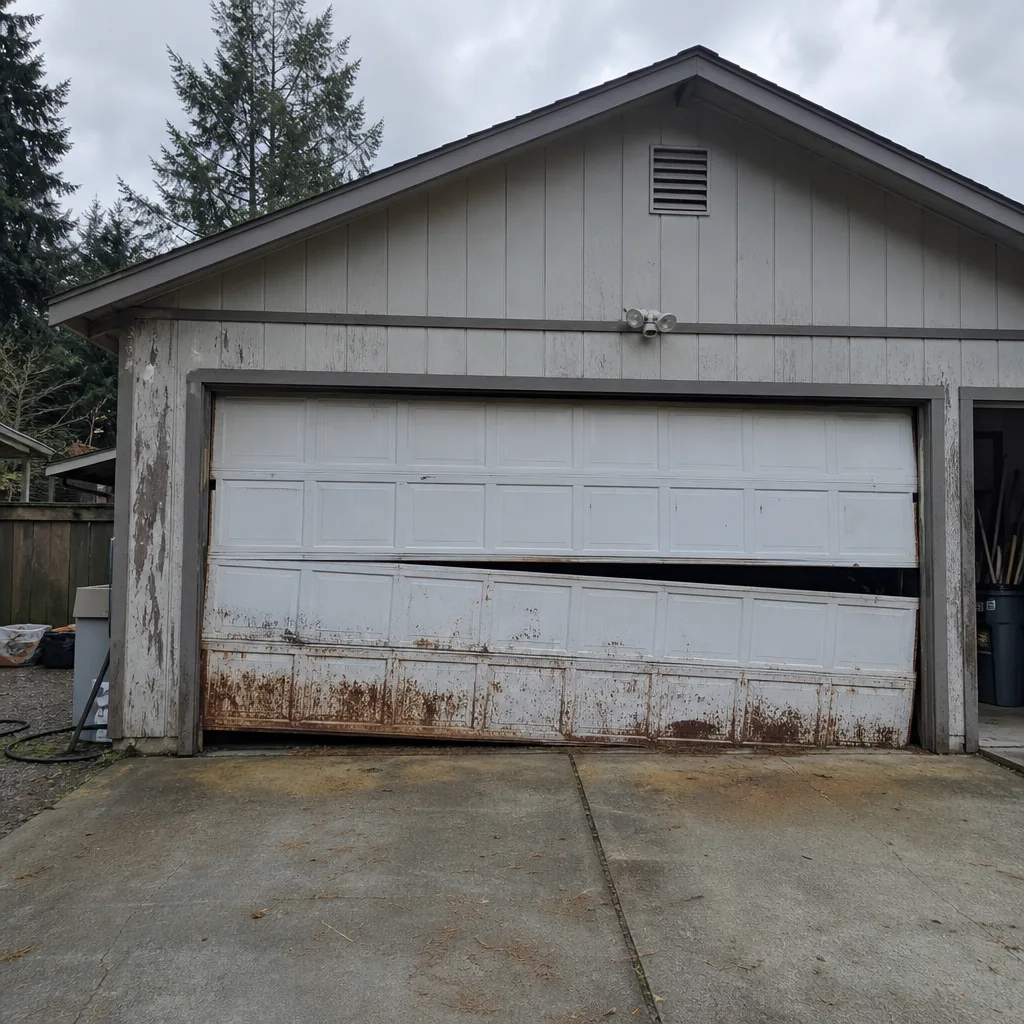
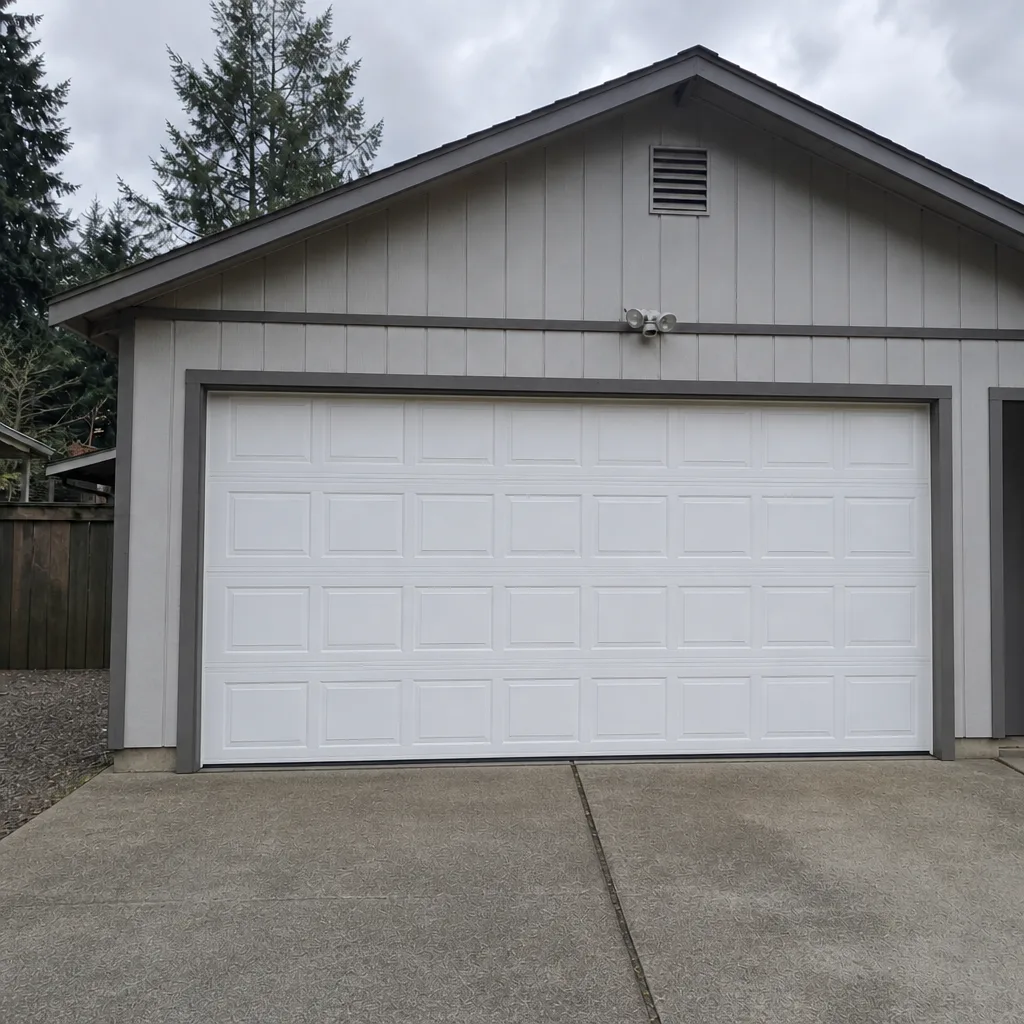
See the difference
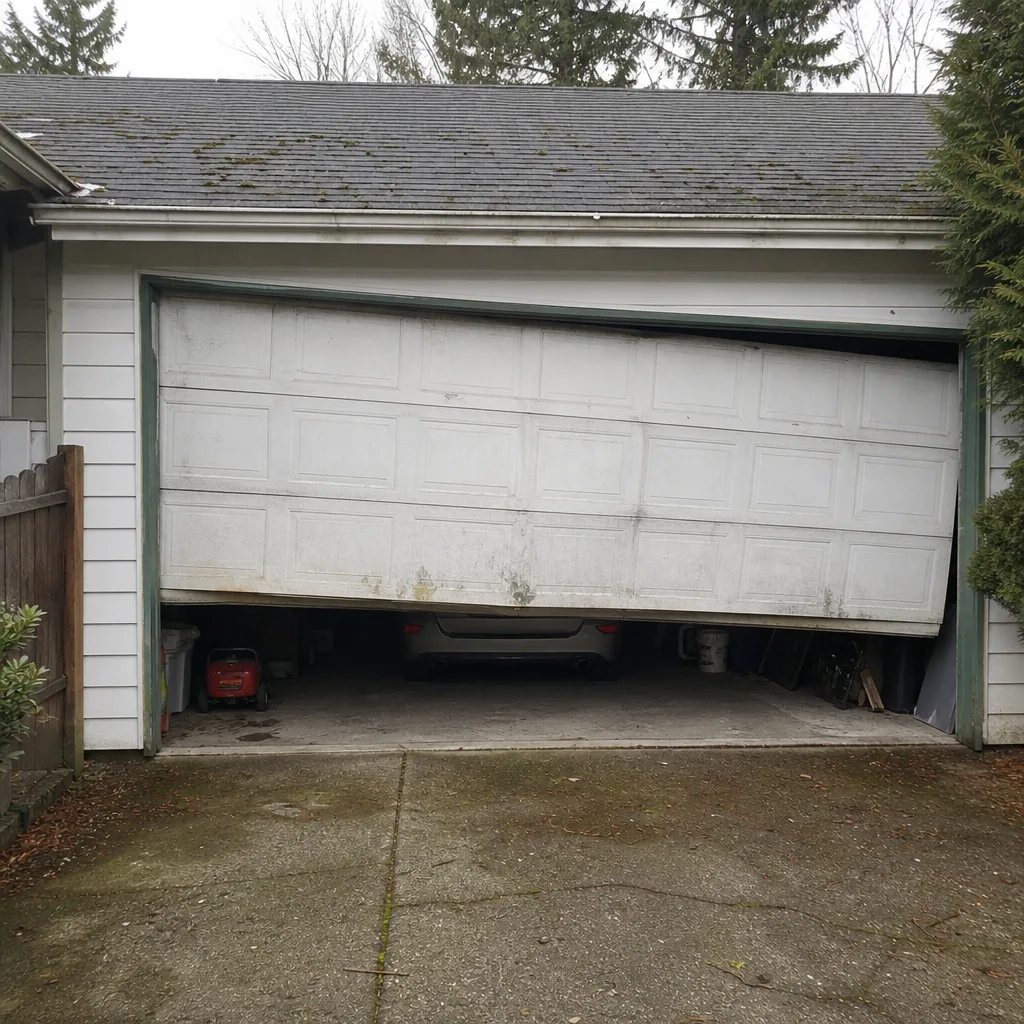 Before
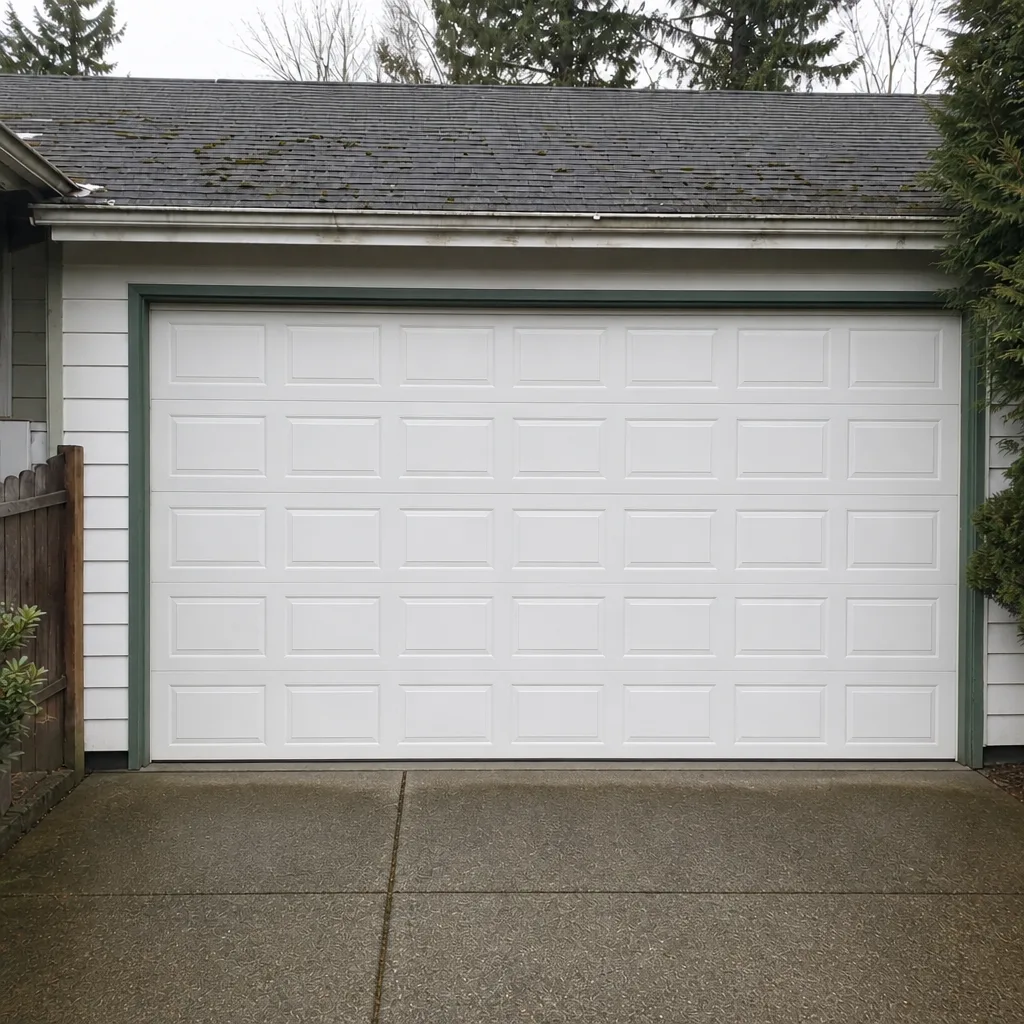 After
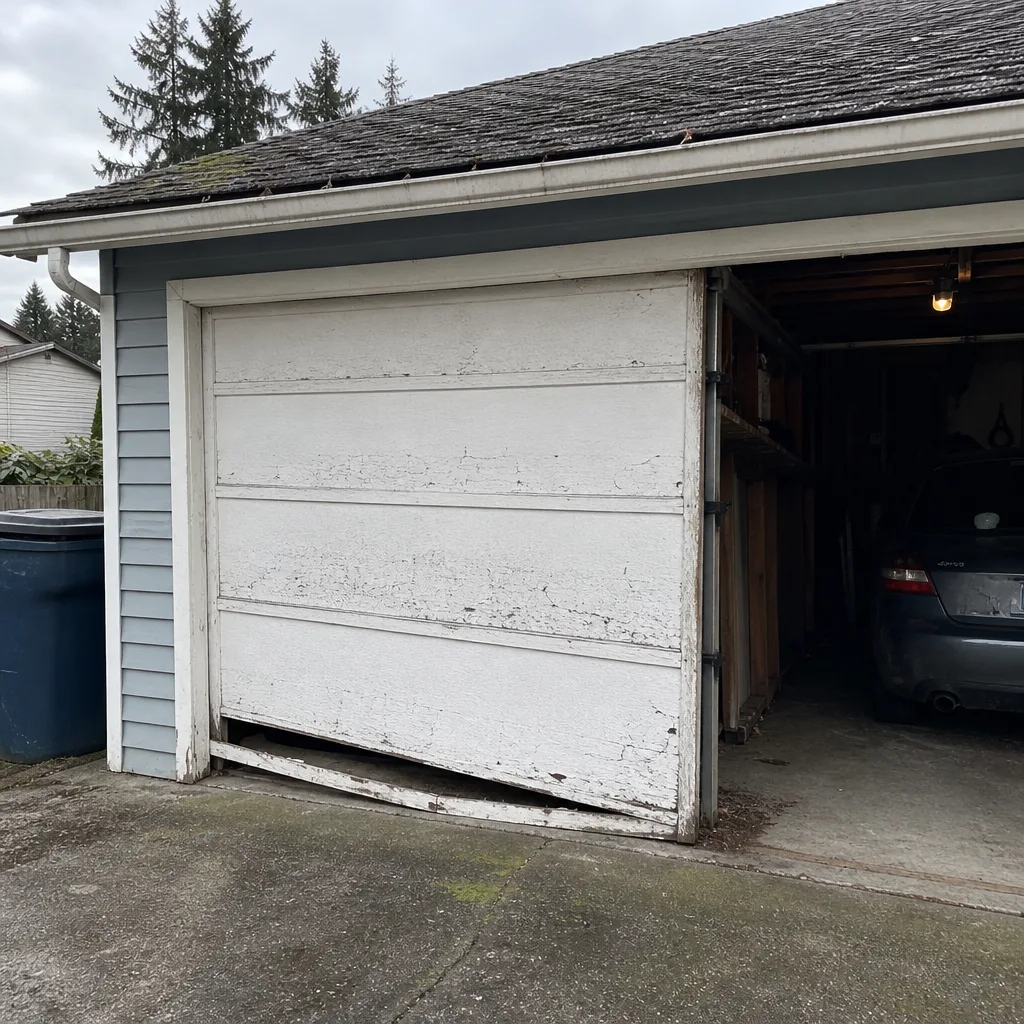 Before
 After
 Before
 After
When to Call a Professional
Call us when the door is doing something it didn’t do last week: popping, dragging, slamming, or coming down crooked. Call when you find rust on the springs, a frayed cable, or a bottom seal that’s letting water in. Call when the opener runs but the door doesn’t move, or when a repair needs springs, cables, tracks, panels, or electrical work. And call when you’d rather have a trained eye go through the whole system than guess at what’s safe. Our technicians have up to 11 years of experience and work across eight major brands, so whatever brand is on your door, we know it. Lake City Garage Door Repair offers free estimates in Lake City. Call (888) 991-5420 and we’ll tell you what needs attention and what can wait.
Frequently Asked Questions
Twice a year is the baseline in Lake City’s climate: an inspection in early fall before the wet season and a follow-up in early spring. Add a quick visual check in mid-winter and mid-summer, and check the bottom seal and floor for water after any stretch of heavy rain. Doors that are older or exposed to more weather benefit from a professional tune-up on top of that.
Check the springs and cables first, from a safe distance with the door closed. In Lake City’s wet climate, corrosion on the springs and fraying on the cables are the most common causes of serious failures, and they’re the checks a generic checklist usually puts last. Look for rust, a gap in a spring, and frayed or kinked cables.
You can apply a light coat of silicone spray to the coils of a torsion spring, but you must not adjust, remove, or handle the spring itself. Springs are under extreme tension and can cause serious injury if they release. If the spring shows heavy rust or a gap, stop using the door and call a professional.
White lithium grease on hinges, rollers, and bearing plates, and a silicone-based spray on the tracks and spring coils. Avoid WD-40 as a long-term lubricant, because it’s a solvent that washes out in wet conditions. In Lake City, apply a fresh coat in early fall before the rainy season so the protection holds through the wet months.
Repair is usually the right call when the problem is worn parts: springs, cables, seals, rollers, or a failing opener. Replacement makes more sense when the panels are structurally damaged, the wood is soft or warped, or the cost of repair is close to the cost of a new door. A professional inspection tells you which side of that line you’re on.
It doesn’t prevent every repair, but it catches the problems that would otherwise turn into bigger ones. In Lake City, a fresh coat of lubrication before the wet season, an intact bottom seal, and attention to wood and paint are the checks that save the most money. Springs, cables, and openers eventually wear out no matter how well you maintain them, but catching wear early keeps a small repair from becoming a door that’s unusable.
A noisy door is usually a lubrication or hardware issue, and it’s worth having it looked at if the noise is new. If the door is also jerky, slow, or uneven, the cause may be a spring or balance problem rather than just squeaky rollers. Call (888) 991-5420 and we’ll help you figure out which it is.
The Bottom Line
Lake City’s wet climate changes the order a garage door maintenance checklist should follow. Springs and cables come first because corrosion there is the most dangerous failure. Bottom seals come next because they keep moisture out of everything else. Wood panels and paint come third. Lubrication goes where it actually helps, with products that hold up in the damp season, not against it. Work the schedule around the early-fall and early-spring transitions, and know the red flags that mean stop using the door today. A couple of focused hours a year keeps the door working through the wet months, and catching the small stuff early keeps it from becoming a spring or cable repair in the middle of winter. One call covers the whole door.
Call Lake City Garage Door Repair at (888) 991-5420 for a free estimate. We handle repair, opener repair, spring repair, parts, and installation across eight major brands, so whatever brand is on your door, we know it.
Written by the team at Lake City Garage Door Repair.