Last updated November 21, 2026
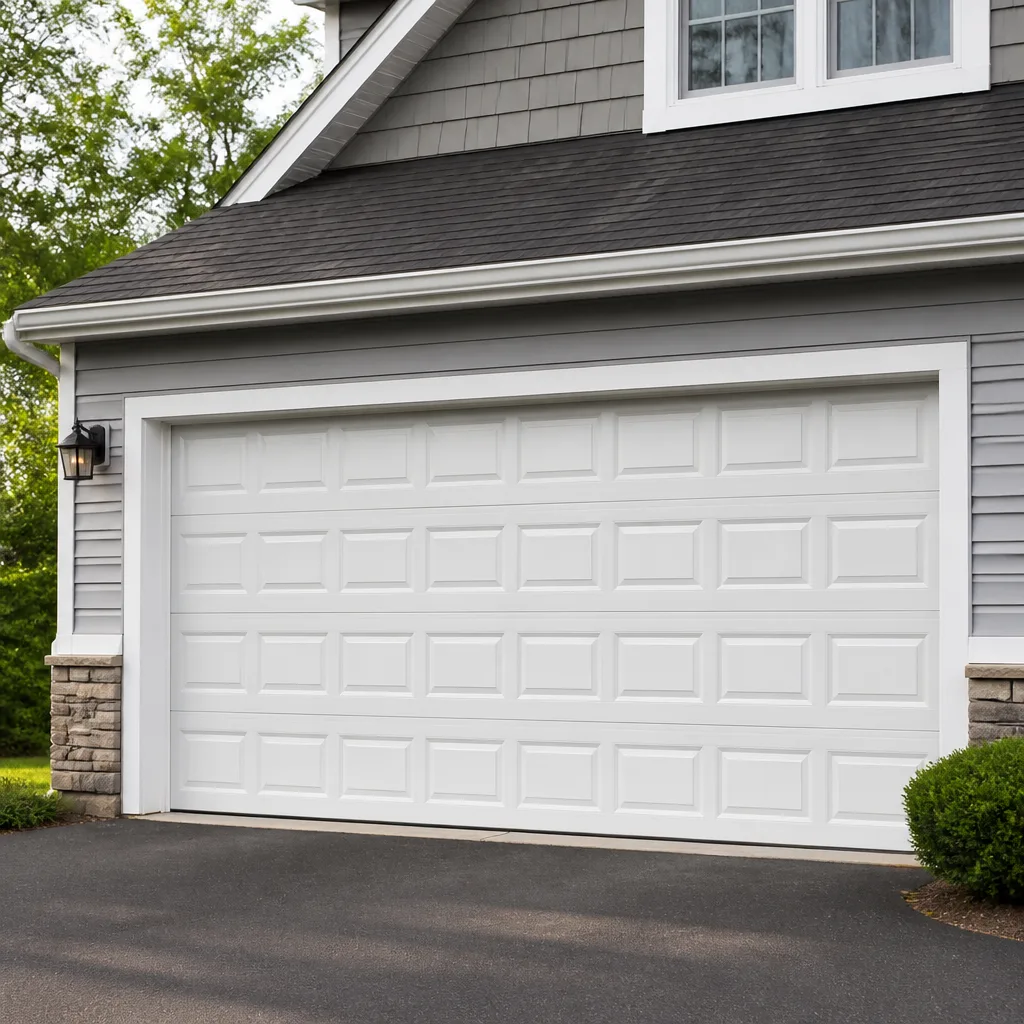 Raised-panel steel
 Carriage house
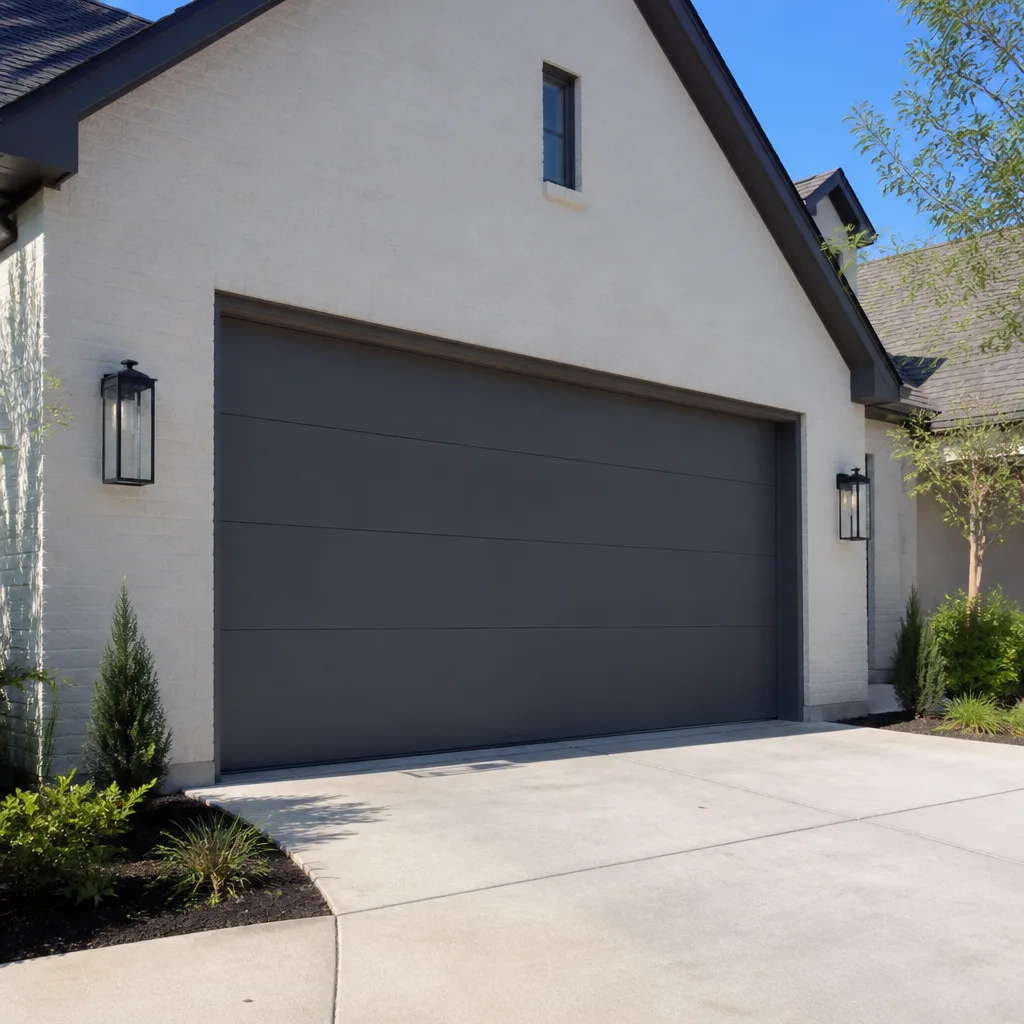 Modern flush
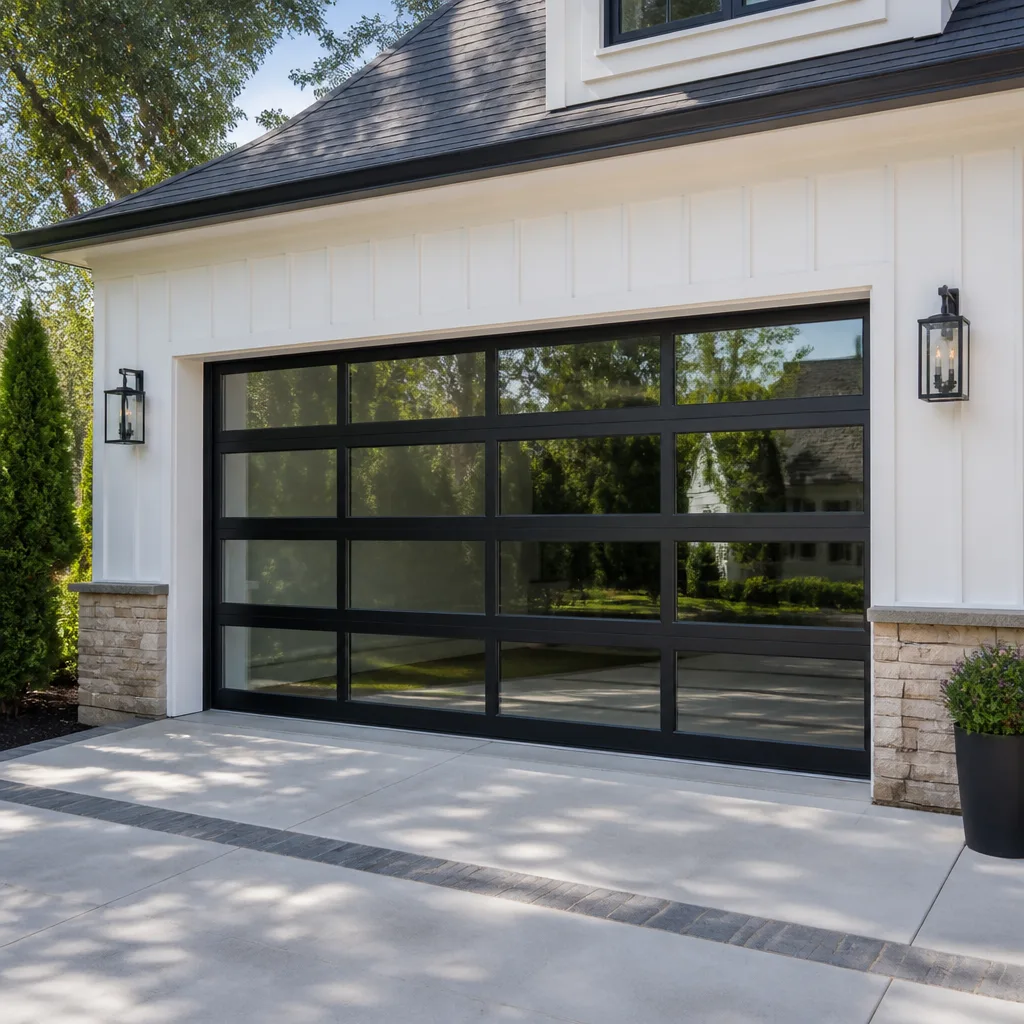 Full-view glass
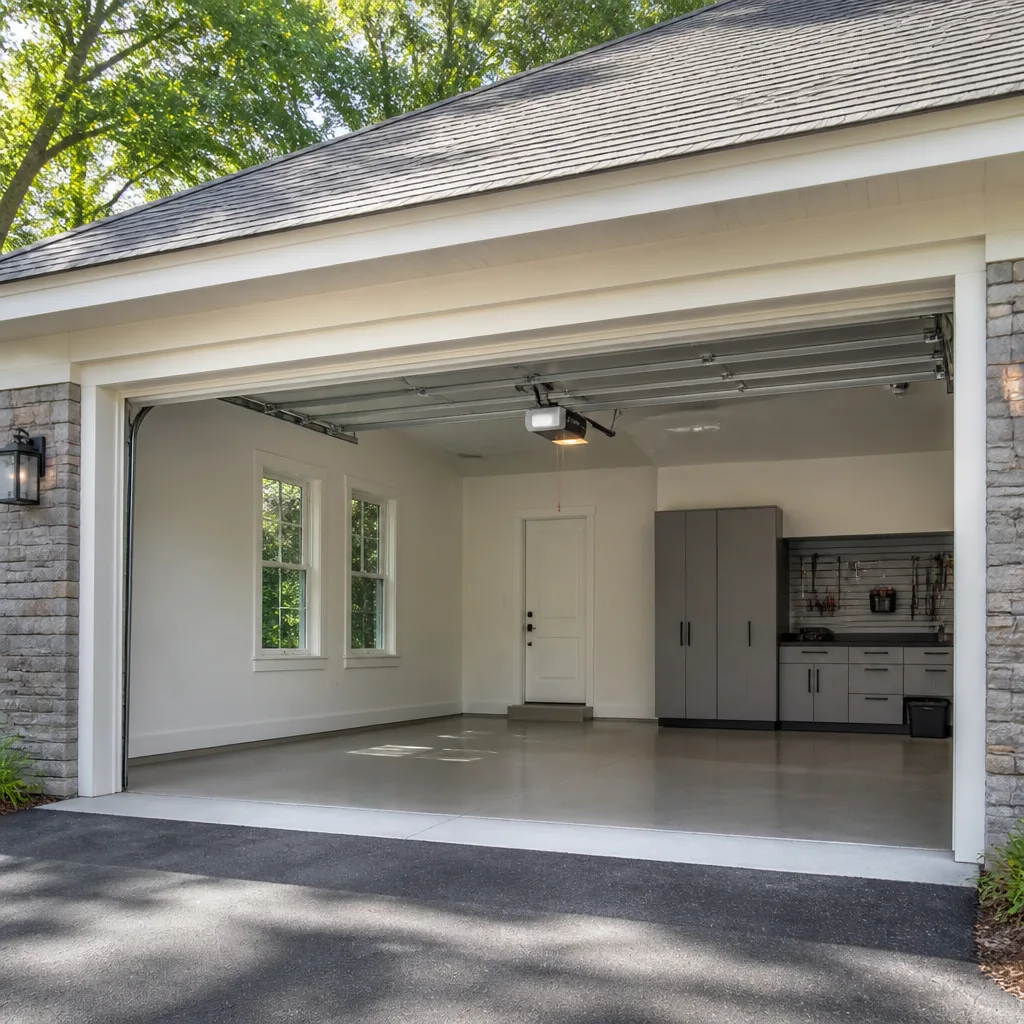 LiftMaster openers
 Chamberlain openers
Full 25-point door and opener safety check with every visit - springs, cables, rollers, tracks, and your LiftMaster or Chamberlain opener included
You get a price before we start. It does not change when the pro arrives.
Get your free estimateGarage Door Warning Signs: A Lake City Homeowner’s Reference Guide
A garage door doesn’t fail without warning. It rattles differently, moves slower, pulls to one side, makes a new sound during the last six inches of travel. The problem isn’t that the signs are hidden. It’s that most homeowners don’t have a reference for what normal sounds and movements actually are. Once you know what a healthy door looks and sounds like, the changes stand out immediately, and you can catch a failing spring or a loosening cable weeks before it leaves your car trapped inside. In this guide, we’ll walk through the sounds, sights, and quirks that signal trouble, how to triage them by urgency, and how a 60-second check catches most pre-failure conditions. This is written for Lake City homeowners who’d rather schedule a repair than make an emergency call.
Quick Answer
The most reliable garage door warning signs are new or changing noises (especially grinding, popping, or snapping), jerky or uneven movement, a door that reverses before closing, fraying cables, and visible rust or rot along the bottom seal and frame. Any single snapping or popping sound from the torsion system means shut the door down and call a professional right away. Most other signs give you a window of weeks to months to schedule service, which is almost always cheaper and less disruptive than waiting for a full breakdown.
Styles & brands we work with
- Raised-panel steel
- Carriage house
- Modern flush
- Full-view glass
- LiftMaster openers
- Chamberlain openers
Table of Contents
- What is your door telling you? An audio diagnostic guide
- Visual warning signs in a wet climate
- Operational quirks that aren’t quirks
- The two urgency windows: one year vs. one week
- The 60-second self-test
- Springs, cables, and the signs you must never handle alone
- Is it the door or the opener? How to tell
- Why brand matters when you call
What Is Your Door Telling You? An Audio Diagnostic Guide
Sound is the first language a garage door uses to signal problems. A door that’s in good shape produces a steady, low mechanical hum from the opener and a smooth roll of wheels in the track, with nothing sharp or irregular. Once you’ve heard your own door when it’s healthy, the following differences become easy to place. Here’s what each common sound usually points to, and how urgently to act on it.
- Grinding during travel: Dry or worn rollers, a track that’s out of alignment, or a failing opener gear. In most cases, this is a schedule-soon sign rather than a shut-it-down emergency. Left alone, grinding wears the track and accelerates roller failure.
- Popping or snapping from above: Usually a torsion spring or a cable under tension. Stop using the door and call a technician. This is the highest-risk sound on the list because a spring or cable can release suddenly. Never try to inspect or adjust a torsion spring or cable yourself; the parts are under extreme tension and can cause serious injury.
- Squealing: Metal-on-metal friction, most often from rollers, hinges, or the opener’s chain or belt. It’s rarely an emergency, but a squeal that appears suddenly after rain is worth a look because it can also signal early rust.
- Banging or slamming: The door is hitting something at the end of travel. Causes range from a mis-set open or close limit on the opener to a worn torsion spring that can no longer hold the door’s weight. Get this one scheduled within the week.
- Rattling that’s new: Loose hinges, a track that’s come away from the frame, or a section that’s starting to separate. Sometimes it’s just a loose bolt, but it’s worth a quick visual check along the rails.
Because Lake City’s wet winters load the track and hinges with moisture, we typically hear squeals and grinds here a season earlier than in drier towns. If your door has started talking, that’s your cue to have someone look at it rather than wait for it to stop listening.
Visual Warning Signs in a Wet Climate
Every fall in Lake City, doors that spent the summer looking fine start showing the toll of moisture. Steel panels rust, wooden frames swell, rubber seals split, and cables quietly fray along contact points. You don’t need to be an installer to spot most of it. You just need to know where to look. Here’s a quick reference for what to inspect and what each sign means.
- Surface rust along the bottom edge and hinges: A little orange dust on a steel door is cosmetic. Bubbling paint or crusty rust that pits the metal is not; that’s structural moisture exposure, and it worsens each wet season. Check the bottom panel first, because it holds the most standing water.
- Bottom weather seal deterioration: A split or stiff seal lets water pool under the door and into the frame. In Lake City, a bad seal also invites pests and drafts, and eventually rots the panel above it. Replace it as soon as cracks appear.
- Wood joint gaps: On wooden doors, watch for daylight or visible gaps opening between joints and rails. Swelling and shrinkage cycles open the joints over the wet season, and once water gets inside, rot follows faster than you’d expect.
- Frayed or kinked cables: Look at the steel cables that run along the sides. Fraying shows as little burrs or a fuzzy look near the drum. A cable that’s starting to show individual wires is a call-now problem; it can snap and drop the door.
- Bent or worn track: A dented track, or a wheel that’s popped off, shows up as a wobble or a flat spot. Small alignment issues grow, so fix them before the door starts binding.
- Loose hinges and rollers: Wiggle each hinge by hand. Any that feel loose, or that have worn oval holes, should be replaced. These are the usual sources of the grinding noise from the previous section.
If you’re seeing frayed cables or a door that binds in the track, that’s the point to stop cycling the door and get it inspected. Our garage door repair service covers everything from cable replacement to seal and weather damage, and we quote before any work begins.
Operational Quirks That Aren’t Quirks
Slowness, a partial reversal, or a remote that takes a second try are the symptoms homeowners most often dismiss as “just how it is.” They aren’t personality traits. Each one usually points to a specific component that’s degrading, and each is much cheaper to fix before it fails. Here’s how to read the quirks.
- Slow or labored close: On a door that used to move faster, this points to a spring that’s losing tension or a drive system that’s struggling against extra resistance. Don’t just “help” the door by hand; that masks the likely failing part.
- Partial reversal during close: The safety reverse feature is doing its job. It’s triggered by a misaligned safety sensor, a binding track, or debris on the photo-eye. Check the sensor lenses for dirt, then have the alignment checked if it persists.
- Uneven travel (one side higher): This is usually a cable tension or drum problem, or a track that’s out of alignment on one side. Uneven travel puts extra load on the springs and the opener; sort it before it compounds.
- Remote lag or intermittent range: Usually batteries, antenna placement, or an older opener that needs a logic board reset. On a garage door opener repair call, this is often a quick fix.
- Door opens a few inches and stops: A classic sign of a broken spring or a stripped opener gear. Treat it as a stop and call, not an “it’s just cold” moment.
- Opener runs but door doesn’t move: Could be a broken spring, a snapped cable, or a disconnected emergency release. Get it looked at before you force anything.
Tracking these quirks in a small notebook (or phone note) helps a lot when you call. “It’s been slow on the close for about three weeks and reverses every fifth time” tells a technician far more than “it’s acting weird.” It also means we can bring the right parts on the first visit.
The Two Urgency Windows: One Year vs. One Week
Not every warning sign deserves the same response. Sorting them into two time windows keeps you from panicking over cosmetic rust and from waiting on a frayed cable. Think of it as triage: most signs give you a year to act, some give you a week, and a small set need the door stopped today. This is the framework we use when a homeowner calls asking “how soon should I deal with this?”
Signs on a one-year or longer window
- Light surface rust on a steel panel (below the paint-bubbling stage)
- A cosmetic dent or scrape that doesn’t affect travel
- A slightly worn bottom seal that still keeps weather out
- Squeak from hinges that responds to lubrication
- An opener remote that responds on the second try
These are tune-up items. They should get on your list, but they’re not what strands a car at 7 a.m.
Signs on a one-week window
- Grinding that’s gotten louder or more frequent
- A door that closes unevenly or bounces at the floor
- Repeated reversing that you’ve already cleaned the sensor for
- A track that’s visibly bent or a roller that’s popped out
- Wood joint gaps opening in the frame
Book these within the week. They’ll stay functional for now, but each one tends to compound, and the repair cost rises with the compounding.
Signs that mean stop today
- Any snapping or popping from the torsion spring or cable area
- A cable that’s frayed enough to see individual wires
- A door that free-falls or drops suddenly
- A door where one side has visibly dropped relative to the other
For these, don’t cycle the door again. Call a technician and let them assess it in place. Springs and cables carry a high load even when the door is down; the danger is in the part, not the weight of the door.
The 60-Second Self-Test
You don’t need tools to catch the most common pre-failure conditions. The following self-test takes about a minute (longer the first time), and it’s the same sequence a technician runs on sight. Do it once a season, more often in Lake City’s wet months. If anything on the list fails, that component is on the one-week or stop-today list.
- Look at the springs. A torsion spring is the horizontal coil above the door; on many doors, a break shows as a clear gap in the coil. Just look. Do not touch.
- Scan the cables. Run your eyes along the vertical cables at each side. Any fuzziness, a kink, or a cable that’s come off its drum is a stop-today flag.
- Check the bottom seal and frame. Look for torn rubber, water pooling under the door, or new gaps at the joints.
- Look at the track and rollers. Any visible bend, a roller off the rail, or a worn hinge means the door isn’t rolling cleanly.
- Test the balance. With the door about halfway up and the opener disengaged (pull the red release handle), the door should stay put. If it drops or rises on its own, a spring is out of balance and needs a professional.
- Test the safety reverse. Place a piece of wood on the floor under the door (or use the manufacturer’s test method) and close the door. It should reverse on contact with the obstruction.
- Listen. Open and close once and really listen. Any new grind, pop, or squeal goes on the list.
For the balance test, we recommend the “look but don’t adjust” approach. Springs under tension can release without warning; leave the adjustment to someone who’s trained for it. If the balance test fails, that’s the moment to call for our Lake City Garage Door Repair team rather than attempting it yourself.
This test also helps you answer the most useful question on a service call: “When did you first notice it?” A door that started grinding last week usually needs a very different repair from one that’s been grinding since spring. Our technicians have up to 11 years of experience reading that timeline, so a clear answer from you speeds the diagnosis and lets them bring the right part.
Springs, Cables, and the Signs You Must Never Handle Alone
Torsion springs and lift cables are the two components under continuous high tension. That’s true even when the door is fully down and even when nothing seems “wrong.” A spring releases its stored energy in an instant; a cable under load can whip when it fails. If you see a gap in the spring coil, a cable with visible fraying, or a door that free-falls, stop using the door and let a trained technician take it. There is no safe home fix for a broken torsion spring, and the risk isn’t worth the delay it saves.
There’s also a subtler danger: the door that “seems fine” after a spring breaks. Sometimes the remaining spring and the opener can move the door part way, giving a false sense of security. That door is being held up by parts under stress they weren’t designed for. The safest move is to disconnect the opener (red release handle), leave the door down, and call.
Spring replacement is a core part of what we do, not an add-on. We quote the job in advance so you know what’s involved before any work starts:
- Torsion spring replacement (one spring): typically $180 to $340. A matched pair is usually replaced together, so a pair typically runs about twice that. The written estimate you receive sets the final price.
- Lift cable replacement (per side): typically $120 to $220.
- Track realignment or roller replacement: quoted by inspection, since scope varies with the size of the misalignment.
If your door is showing any of the stop-today signs above, don’t wait for a convenient afternoon. Call us early. You’ll avoid the 7 a.m. call on a workday when the car’s trapped inside, and you’ll get an honest read on whether it’s a spring, a cable, or both.
Is It the Door or the Opener? How to Tell
The door system and the opener are two separate machines, and a warning sign belongs to one or the other. That matters because the fix is in a different place. A few reliable tests separate them without special tools.
- The opener runs but the door doesn’t move: Door problem. It’s a spring, a cable, or a disconnected release. The opener is likely fine.
- The door moves but the opener light flashes and stops: Opener problem, often a safety sensor or a logic board.
- The door moves fine by hand but poorly on the opener: The opener is undersized, mistuned, or the drive gear is worn. The door itself is healthy.
- The door binds in the same spot on every cycle: Mechanical door issue in the track or hinges, not the opener.
- The opener beeps, blinks, or reverses without input: Logic board or sensor; get the opener side checked.
When you book service, telling us which side of that list your door falls on gets the right tools on the visit. It’s a good example of why a full-scope garage door company helps: on a single call, we can service the door and the opener because they’re different systems with different parts. If the diagnosis lands on the opener side, take a look at our garage door opener repair page for some pointers before you call.
Why Brand Matters When You Call
Warning signs look different on different products. A Craftsman opener from the early 2000s and a current LiftMaster unit share design ideas, but their drive gears, logic boards, and sensor setups differ. A Raynor door has different hinge geometry than a typical Clopay panel. When you see a warning sign, the fix depends on which brand and model you have, and the part you need is specific to it.
That’s why we work with eight of the most widely installed brands: LiftMaster, Chamberlain, Genie, Clopay, Amarr, Wayne Dalton, Craftsman, and Raynor. It covers the vast majority of doors actually on homes in Lake City, and it means you don’t hear “we don’t work on that one” after you’ve described the problem. That breadth also means we can usually source the right replacement part quickly. Parts supply is a real difference on this type of call: a hinge that’s right for your door avoids a second visit, and a spring pair that matches your original rating is safer than a mismatched replacement.
So when you see a warning sign, note the two names: the door brand and the opener brand. Check the sticker on the opener (usually under the light cover or on the end panel) and the tag or sticker on the door’s bottom panel. Write them down. That, plus which sound or quirk you’ve noticed, gets the fastest possible diagnosis. If you’re seeing signs on a door that’s starting to fail beyond economical repair, our garage door installation service can walk you through a replacement quote. Otherwise, it’s usually a repair call.
Common Mistakes to Avoid
We’ve seen a lot of avoidable damage from small misjudgments. These are the ones most worth calling out:
- Helping the door by hand. Pushing or lifting a sluggish door masks the failing spring or cable that’s actually causing the problem, and it loads parts beyond their design.
- Treating a popping spring like a squeaky hinge. A repeated pop from above the door is a tension failure sign, not a lubrication issue. Shut the door down and get it assessed.
- Ignoring a slow-closing door through the wet season. In Lake City, a slightly slow door in October often becomes a stuck door in January. Cold and moisture amplify the problem.
- Cleaning the safety sensors and stopping there. If a door reverses repeatedly, cleaning the sensor is step one, but persistent reversal usually indicates a track or cable issue worth a proper inspection.
- Waiting for the annual homeowner task list. Garage door checks don’t always make the list, and by the time they do they echo a failing part. Add the 60-second self-test to your seasonal routine.
- Assuming every fix is a new opener. Many “my opener is dead” reports turn out to be a broken spring or a disconnected cable. The repair is in the door, not the opener.
- Forgetting to write down the brand. A quick note of the door and opener brands at the moment you notice a sign saves time on the call and can prevent a second visit.
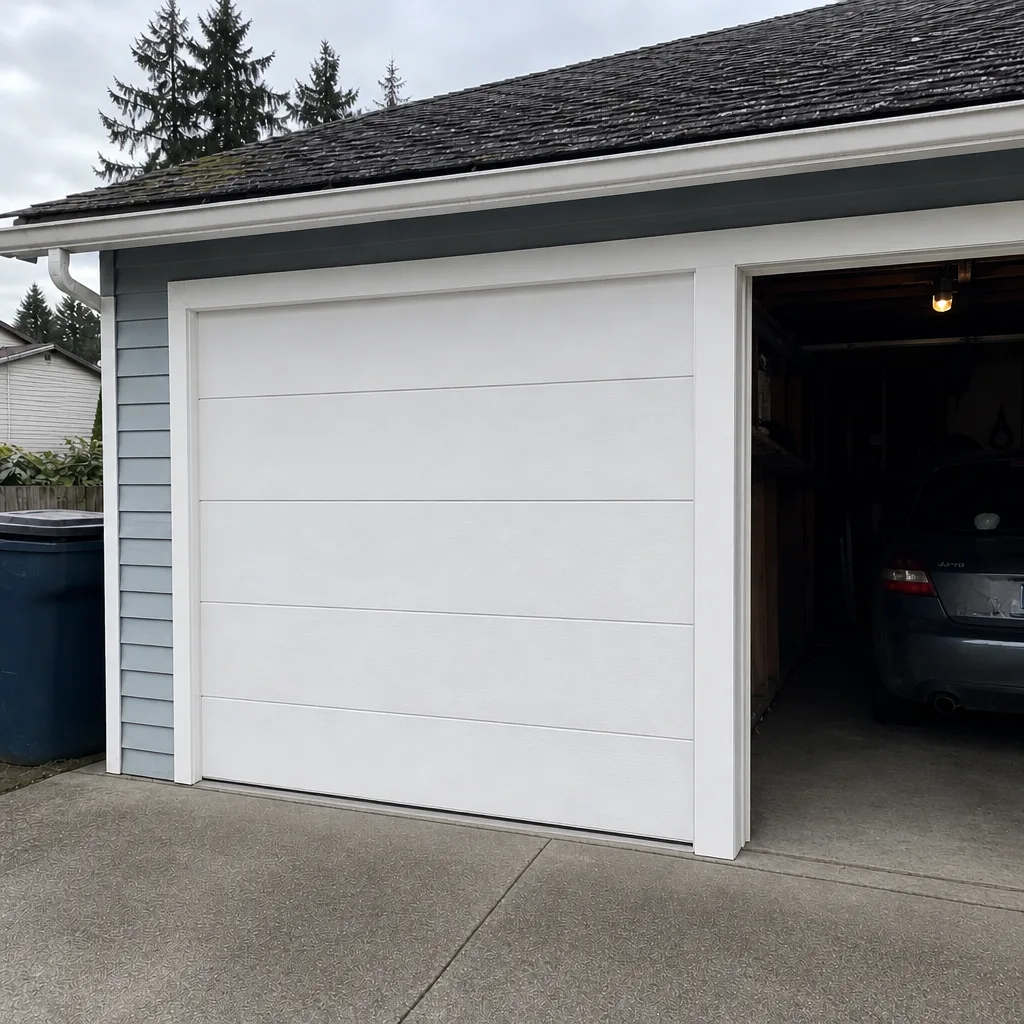
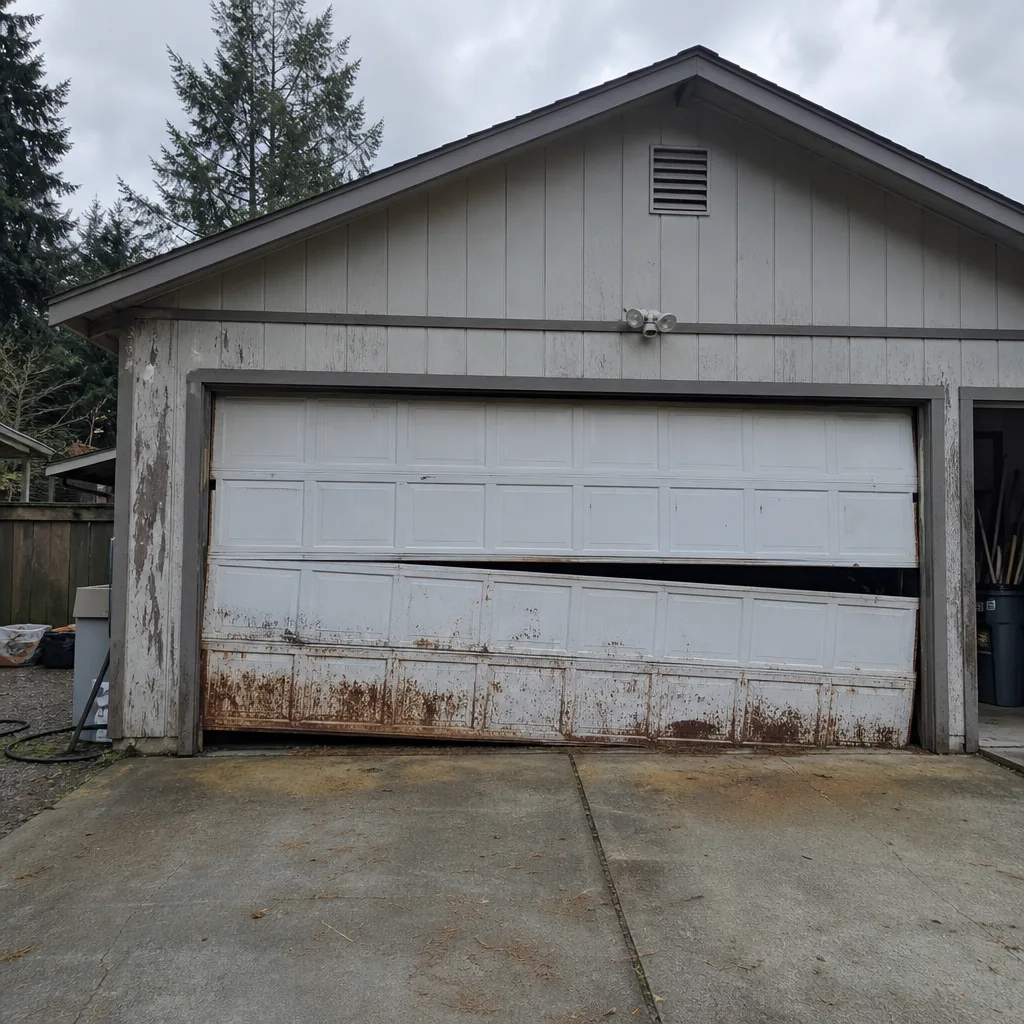
See the difference
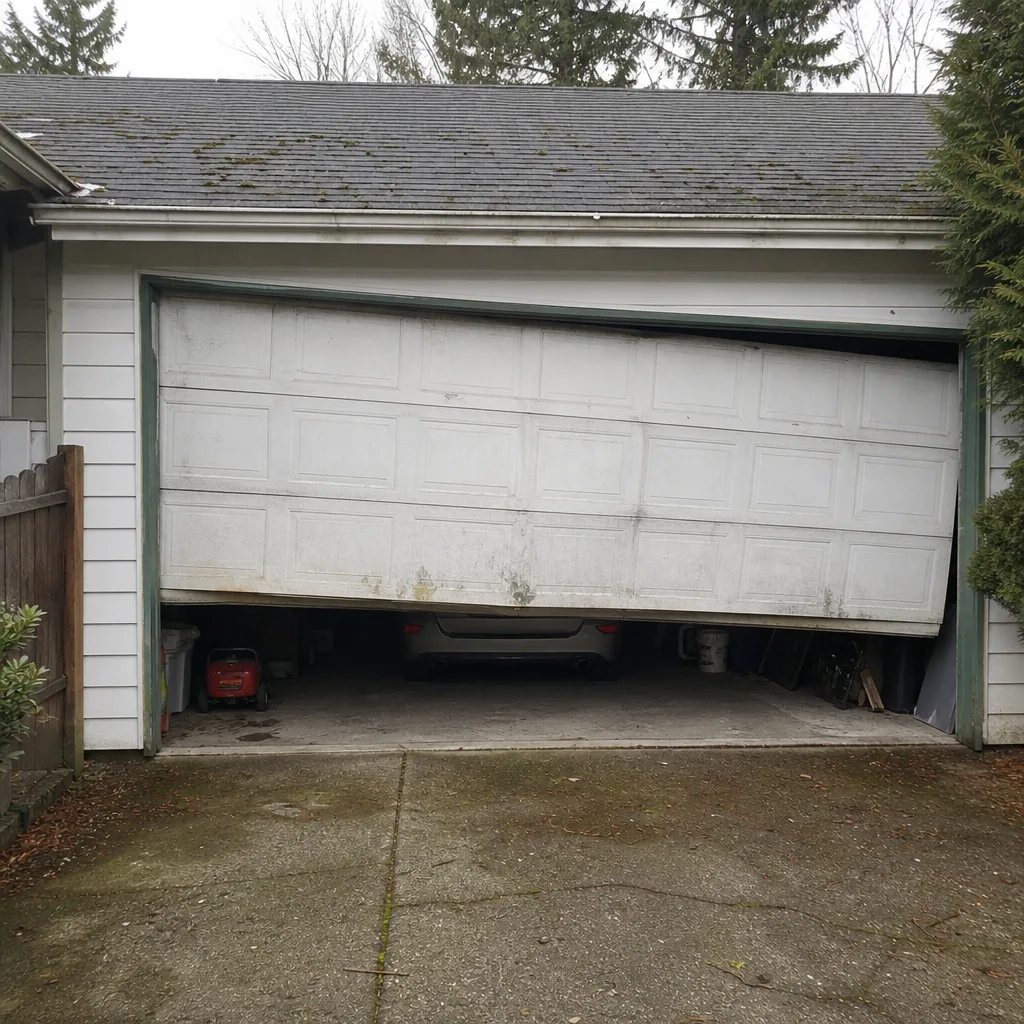 Before
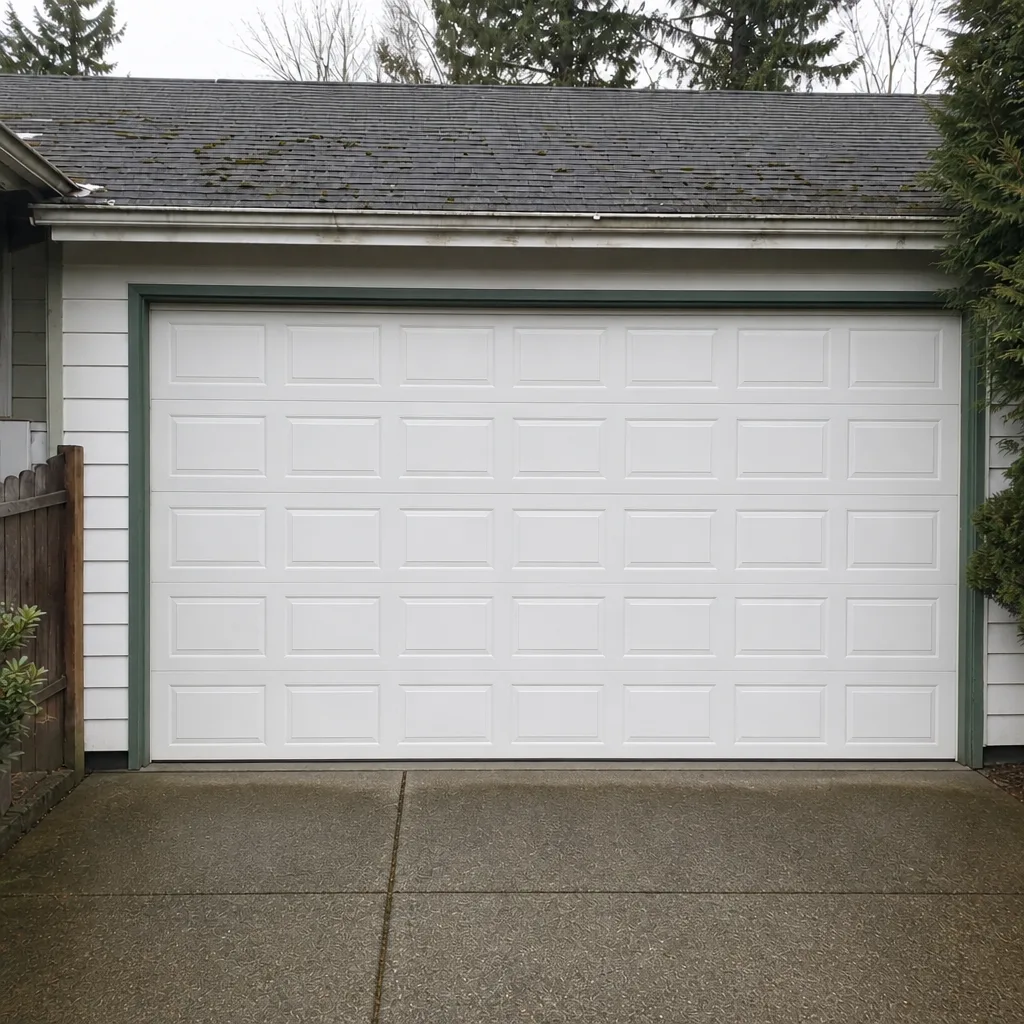 After
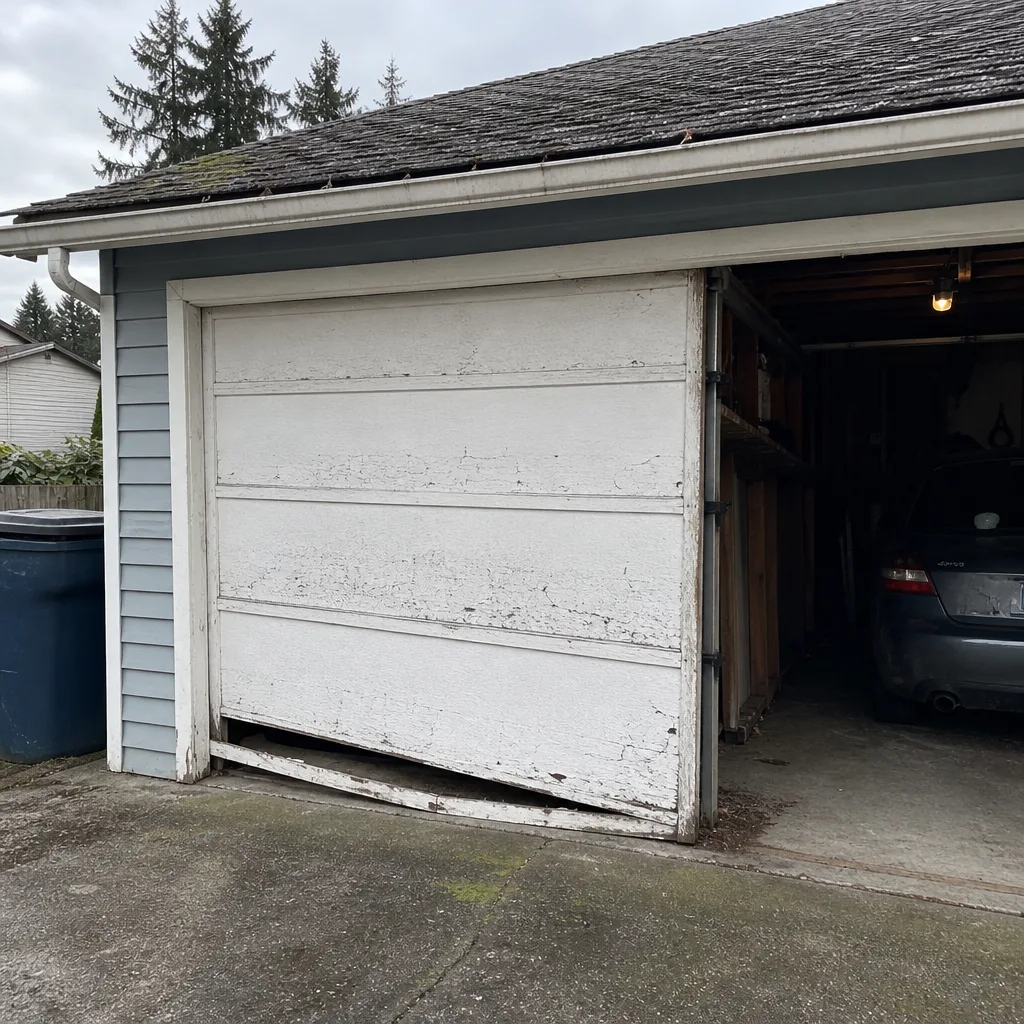 Before
 After
 Before
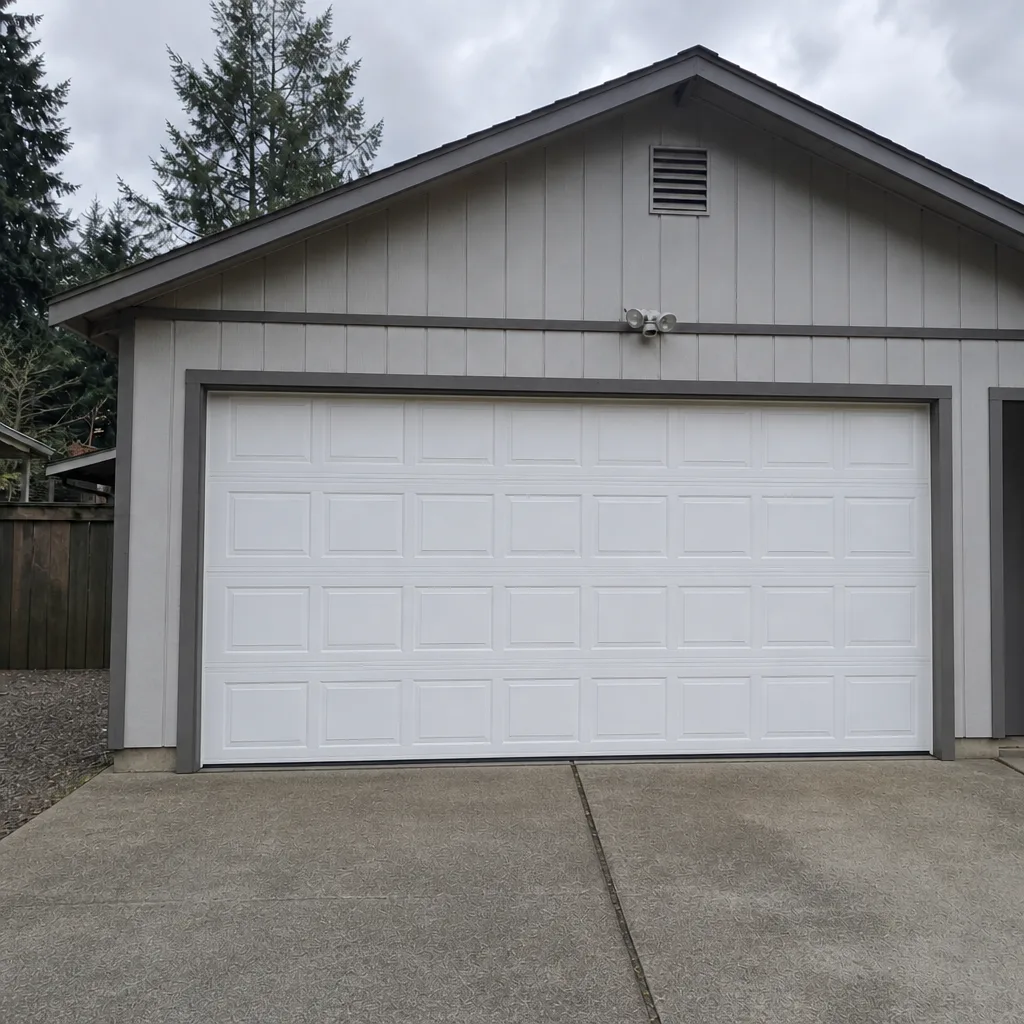 After
When to Call a Professional
Call a professional when you see any stop-today sign (popping, snapping, frayed cables, free-fall), when a one-week sign persists after a basic check, or when you can’t tell which side of the system is failing. Also call if any part of your self-test left you unsure. Guessing is the expensive path because the wrong assumption usually leads to a bigger repair. For the fast-moving signs, don’t wait for a convenient window; a winding-down spring can give out at any cycle. For the one-year items, a scheduled visit lets you look at the whole door at once. Lake City Garage Door Repair offers free estimates in Lake City and upfront pricing with a written estimate before any work begins. Call (888) 991-5420 to book a visit, and bring your brand notes and the sound or quirk you’ve noticed.
Frequently Asked Questions
The first warning sign is usually a change in sound: a new grind as the door moves, a pop from the torsion spring above, or a squeal from the rollers. Because the sound changes before the door stops working, listening for the difference is the earliest signal you have. Call (888) 991-5420 for a free estimate if the sound has changed and stayed changed.
Treat a popping or snapping sound as an emergency stop sign. It usually points to a torsion spring or a cable under tension, and both can release suddenly. Leave the door down, disconnect the opener using the red release handle, and call a technician. Don’t try to inspect or adjust the spring yourself; the parts are dangerous even when the door is parked.
A typical torsion spring replacement runs about $180 to $340 for one spring. A matched pair is usually replaced together, so a pair typically costs about twice that. You’ll get a written estimate before any work starts, and that estimate sets the final price. Call (888) 991-5420 for a free estimate.
If your door won’t open because of a snapped spring or a detached cable, give us a call and let us know what you’re seeing. We’ll get an appointment set as soon as we can and walk through steps to keep the door secure in the meantime. Tell us the door brand and the opener brand if you can, so we can bring the right parts.
Yes, if you keep to the checking-only steps: looking at the springs, scanning cables, checking the seal, and listening during a full cycle. Stop before any part that requires touching or adjusting a torsion spring or cable. If the balance test fails, don’t try to fix it; that’s a call-a-technician moment. Our team can walk you through a phone check if you’re unsure.
Wet weather raises friction and invites rust in the hinges and rollers, which makes the same door sound louder after rain. In Lake City’s wet months, that’s usually the first warning that the moving parts need inspection. If the noise appears suddenly and persists after a dry day, get the door looked at; it’s often a quick fix if caught early. Call (888) 991-5420.
The Bottom Line
Your door is telling you everything you need to know, provided you have a reference for normal. New sounds, uneven travel, a reversing close, or visible rust and fraying are all readable signals. Sort them by their urgency window: most are one-year items you should schedule, a few are one-week items you should book, and a small set (snapping, popping, frayed cables) mean stop and call. Run the 60-second self-test this season, note your door and opener brands, and don’t guess at anything under tension. For the repair itself, Lake City Garage Door Repair covers the whole door and the opener, on the eight major brands most Lake City homes actually have. Call (888) 991-5420 for a free estimate, and we’ll quote before we start work.
Written by the team at Lake City Garage Door Repair.